making a global impact
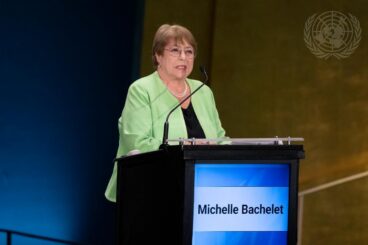
A United Nations at the Crossroads: Leadership, Reform and the Search for Global Trust
The question facing the United Nations is not if reform is needed, but whether it can adapt quickly enough to remain the world’s essential forum for peace, diplomacy, and collective action. Over the past decades, the UN has launched numerous reform efforts aimed at improving its effectiveness, from the Agenda for Peace in the 1990s to management and budgetary reforms introduced in the years since. While some of these initiatives have brought incremental progress, many challenges persist, underscoring the difficulty and importance of meaningful transformation.
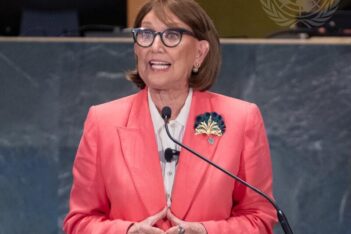
Eighty Years Later: Could the United Nations Finally Elect Its First Woman Secretary-General?
History often unfolds quietly.
Turning points rarely arrive with headlines. Instead, they emerge when long-standing assumptions begin to shift.
The United Nations may now be standing at one of those moments.
During the recent Town Hall for Secretary-General candidates, one theme stood out beyond institutional reform and geopolitical strategy: growing momentum for the United Nations to elect its first woman Secretary-General after eight decades of male leadership.
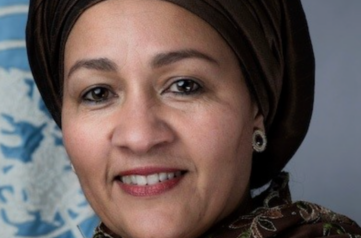
LEADING VOICES: The African Leaders Shaping the Global Conversation on Peace, Women and Security
Global peace and security are under pressure from ongoing conflicts, humanitarian crises, displacement, political instability, and rising geopolitical divisions.
In this changing environment, Africa is moving beyond asking for more representation and is now taking a stronger leadership role.
From the African Union in Addis Ababa to the United Nations in New York, African leaders are sharing a clear message: security and governance are linked, peace and development go hand in hand, and lasting peace is not possible if women are left out of peace talks and agreements.

It. Goes. So. Fast: A Conversation with Mary Louise Kelly
NPR’s All Things Considered host and acclaimed author Mary Louise Kelly joined Sabina Bhatia, Director of the Corporate Services and Facilities Department at the IMF, for a compelling conversation that bridged journalism, leadership, and the personal cost of ambition.

From Crisis to Confidence: Ghana’s Journey to Macroeconomic Stabilization
This week Ghana took center stage as a story of resilience reform, and renewal. The conversation around Ghana’s economic recovery was refreshingly optimistic, a reminder that progress, though hard-won, is indeed possible with discipline and vision.

Pathways to Rural Prosperity: Unlocking Green Jobs for Women and Youth through Renewable Energy Access
When it comes to women, being grounded with a
forward-looking vision, “Pathways to Rural Prosperity: Unlocking Green Jobs for Women and Youth through Renewable Energy Access.” Hosted under the Civil Society Policy Forum (CSPF), it captured the energy and optimism of a
movement determined to make inclusive growth more than just a talking point.

Women’s Financial Resilience: How Global Finance Is Finally Catching Up
Let’s be honest, when women have financial power, everyone benefits. Families grow stronger, communities become more resilient, and economies flourish. Yet for far too long, women have been on the sidelines of finance. From being denied loans to lacking access to savings and insurance, the barriers have been as invisible as they are powerful.

Women and Wealth Transfer: The Next Global Shift
A quiet revolution is underway in the world of finance, and women are leading it. At the recent World Bank and IMF Meetings, one theme stood out loud and clear: women are no longer just part of the economic story; they’re writing it. Across boardrooms, investment firms, and even within multilateral institutions, there’s a growing realization that wealth transfer and financial power are shifting into women’s hands.

The Global Picture: Why Financial Inclusion Matters for Women
When it comes to global progress, women’s financial inclusion isn’t just another talking point; it’s a cornerstone of real, lasting change. It’s directly tied to the United Nations Sustainable Development Goals (SDGs), especially Goal 5: Gender Equality and Goal 8: Decent Work and Economic Growth.

UNGA 80: The Year of International Peace
The 80th Session of the United Nations General Assembly (UNGA 80) marks a historic milestone
in the journey of multilateral diplomacy. In 2025, the General Assembly chose to declare this year as the “Year of International Peace”,
signaling a renewed global commitment to dialogue, cooperation, and conflict prevention.

The Historical Legacy of the UN General Assembly
To understand the significance of UNGA 80, one must look back at the history of the General
Assembly. Established in 1945, following the devastation of World War II, the UNGA was envisioned as the “parliament of humanity.” Unlike the UN Security Council, where a handful of powerful nations hold vetoes, the General
Assembly gives each of its 193 member states an equal voice and vote.

Global Challenges in 2025: Why Peace Matters Now More Than Ever
The declaration of 2025 as the Year of International Peace comes against the backdrop of unprecedented global challenges. Armed Conflicts: Wars in Ukraine, Gaza, Sudan, and other regions continue to cause immense human suffering. These conflicts also destabilize neighboring countries, fuel refugee crises, and divert resources away from development.

Forging Peace Isn’t a Ceremony, It’s a Responsibility We Share
Every September, the UN Peace Bell rings with solemn dignity. Yet Secretary-General António Guterres reminded us: peace isn’t ceremonial, it’s forged. And it’s not only forged in conference rooms but also shaped by every action civil society and philanthropy take in neighborhoods, schools, and fragile communities worldwide.

Global Interests Must Trump National Ones, Here’s Why Civil Society Matters
At the opening of the 80th UN General Assembly, Secretary-General Guterres said what many diplomats hesitate to: national interest is strangling global cooperation. And in an age of pandemics, climate collapse, and mass displacement, national silos are recipes for failure.

When Nations Stall, People Must Step Forward
As conflicts multiply, civilians carry the heaviest burden. The UN Secretary-General was blunt: peace will not appear by accident. It must be built, defended, and demanded. That’s where philanthropy and civil society cannot afford to look away.