making a global impact
LEADING VOICES: The African Leaders Shaping the Global Conversation on Peace, Women and Security
By Silke Endress International
Six influential African voices are helping redefine conflict prevention, diplomacy, women’s leadership and sustainable peace.
GAAMAC
Global peace and security are under pressure from ongoing conflicts, humanitarian crises, displacement, political instability, and rising geopolitical divisions.
In this changing environment, Africa is moving beyond asking for more representation and is now taking a stronger leadership role.
From the African Union in Addis Ababa to the United Nations in New York, African leaders are sharing a clear message: security and governance are linked, peace and development go hand in hand, and lasting peace is not possible if women are left out of peace talks and agreements.
Six leaders stand out in this evolving conversation: Mahmoud Ali Youssouf, Bankole Adeoye, Liberata Mulamula, Amina J. Mohammed, Martha Ama Akyaa Pobee and Hanna Serwaa Tetteh.
Together, their work covers the African Union, United Nations, diplomacy, development, mediation, peace operations, and the Women, Peace and Security agenda.
THE NUMBERS BEHIND THE CONVERSATION
Almost 26 years after the UN Security Council made Women, Peace and Security a global priority with Resolution 1325, women are still underrepresented in formal peace talks.
In 2024, women represented only 7 percent of negotiators and 14 percent of mediators in formal peace processes worldwide, according to UN Women. Women represented approximately 20 percent of peace-agreement signatories—but only 7 percent when agreements from Colombia are excluded. (knowledge.unwomen.org)
These numbers raise an important question:
How can we achieve lasting peace when half the population is still missing from the negotiating table?
MAHMOUD ALI YOUSSOUF
Advancing African Ownership
As Chairperson of the African Union Commission, Mahmoud Ali Youssouf holds one of Africa’s most consequential diplomatic positions.
The former Djiboutian Foreign Minister leads the AU at a time when conflicts and instability in Sudan, South Sudan, the Democratic Republic of the Congo, Somalia and the Sahel are testing Africa’s peace and security architecture.
His leadership highlights a key idea: African institutions need more authority and resources to handle conflicts on the continent.
That objective received significant international support through UN Security Council Resolution 2719, which established a framework for considering UN assessed contributions for eligible African Union-led peace support operations authorized by the Security Council. (un.org)
Now is the time to turn the idea of “African solutions to African problems” into real action.
BANKOLE ADEOYE
Connecting Governance and Security
Nigerian diplomat Bankole Adeoye, AU Commissioner for Political Affairs, Peace and Security, operates at the center of Africa’s conflict-prevention machinery.
His portfolio brings governance, elections, human rights, peace and security into the same institutional framework. (au.int)
This setup shows a basic truth: security cannot last where political institutions are weak, people do not trust the government, or exclusion leads to instability. Adeoye’s work marks a shift from just reacting to wars to finding out what causes them in the first place.
Today’s security policies should not only ask where peacekeepers are needed, but also where diplomacy, good governance, and early action can stop conflicts before peacekeepers are required.
LIBERATA MULAMULA
Putting Women at the Peace Table
Ambassador Liberata Mulamula, the African Union Commission Chairperson’s Special Envoy on Women, Peace and Security, is leading one of the strongest efforts to make women’s leadership a permanent part of Africa’s security system.
The Tanzanian diplomat brings more than 35 years of experience in diplomacy, governance and conflict resolution, including service as Tanzania’s Minister of Foreign Affairs and Executive Secretary of the International Conference on the Great Lakes Region. (au.int)
Her role is to help ensure women take an active part in preventing conflict, building peace, and rebuilding after conflict in AU Member States.
She faces a big challenge. With women making up only 7 percent of negotiators, just inviting more women to peace talks is not enough. The next step is about giving women real authority: more women as mediators and negotiators, better funding for women-led peace groups, and women involved in carrying out and monitoring peace agreements.
Women need to move from simply taking part to having real power.
AMINA J. MOHAMMED
Peace Through Sustainable Development
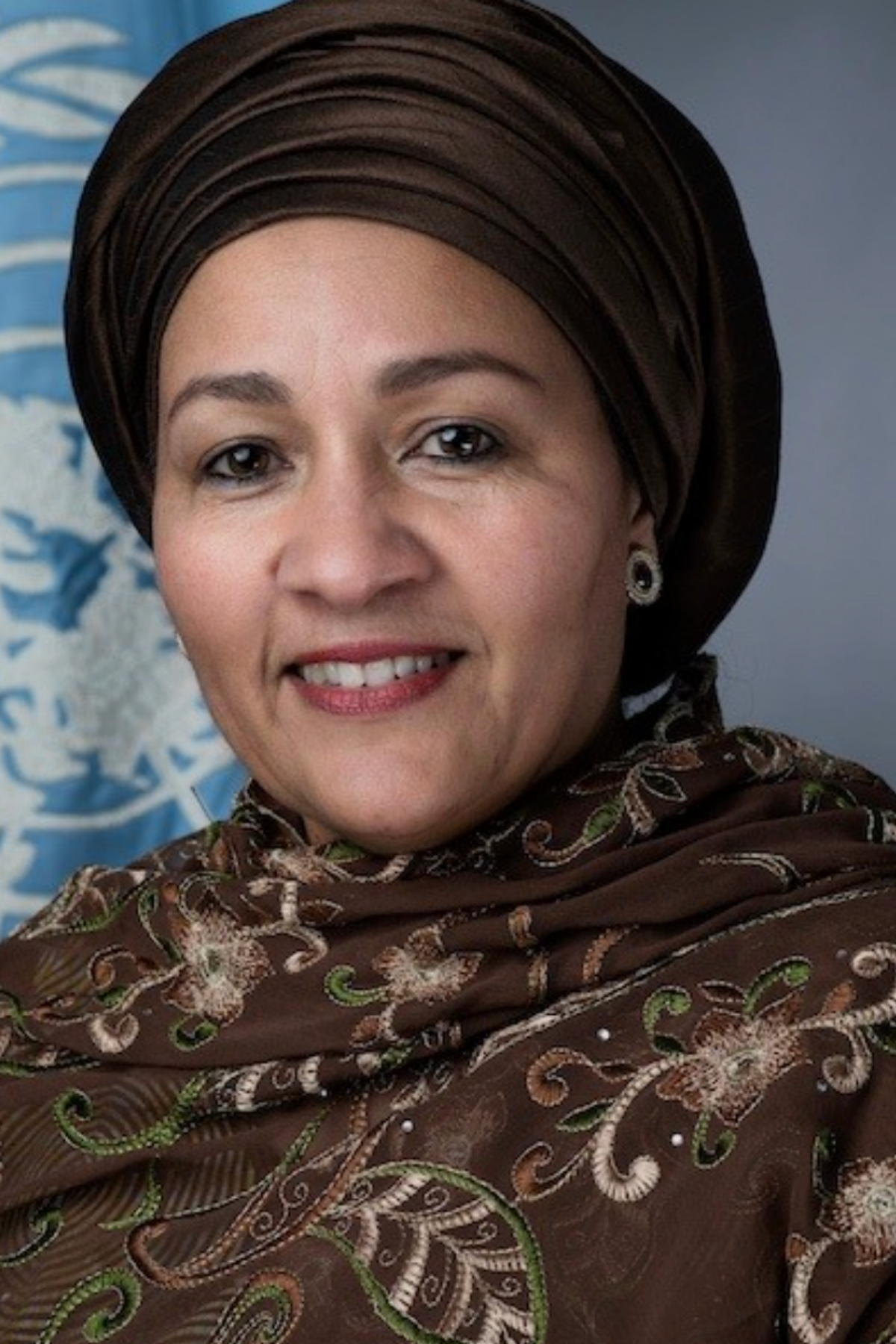
UN Deputy Secretary-General Amina J. Mohammed from Nigeria is expanding what security means.
Before becoming Deputy Secretary-General, Mohammed served as Nigeria’s Minister of Environment and played an important role in shaping the 2030 Agenda for Sustainable Development and the Sustainable Development Goals. She now chairs the UN Sustainable Development Group, coordinating development operations across 162 countries and territories. (un.org)
Her leadership highlights an important idea:
Development policy is also peace policy.
Things like education, food security, climate resilience, women’s economic involvement, jobs, and strong institutions all help communities handle political and economic challenges.
If a security plan waits until conflict starts, it is already too late.
Often, stopping the next conflict starts not with soldiers, but with schools, jobs, clean water, working institutions, and young people who see a future for themselves.
MARTHA AMA AKYAA POBEE
African Diplomacy Inside the UN Security Architecture
Ghanaian diplomat Martha Ama Akyaa Pobee serves as UN Assistant Secretary-General for Africa in the Departments of Political and Peacebuilding Affairs and Peace Operations.
With more than three decades of diplomatic experience, including service as Ghana’s Permanent Representative to the United Nations, Pobee works directly within the UN system responsible for political engagement, conflict prevention and peacebuilding across Africa. (un.org)
Her role shows why African representation needs to go beyond just talking about Africa.
African experts should also be part of the institutions that study crises, advise global leaders, and help shape political decisions.
Pobee acts as a key link between what is happening on the ground and the decisions made in the international security system.
HANNA SERWAA TETTEH
Diplomacy Where Peace Must Be Negotiated
Ghanaian diplomat Hanna Serwaa Tetteh demonstrates what peace diplomacy looks like in practice.
Appointed UN Special Representative for Libya and Head of the United Nations Support Mission in Libya in 2025, Tetteh previously served as the Secretary-General’s Special Envoy for the Horn of Africa and Special Representative to the African Union. (un.org)
In Libya, her work has centered on advancing a political roadmap and dialogue across interconnected areas including governance, security, the economy, national reconciliation and human rights.
Her work shows an important truth about peacebuilding: conflicts usually have many causes, so they rarely have just one solution.
Lasting peace needs political dialogue, strong institutions, economic stability, reconciliation, and ongoing diplomacy.
SIX VOICES, ONE GLOBAL CHALLENGE
These six leaders represent different parts of an emerging African peace and security ecosystem.
Youssouf advances African political ownership. Adeoye connects governance with security. Mulamula places women within the architecture of peace.
Mohammed connects development with prevention. Pobee brings African diplomatic expertise into the UN peace and security system. Tetteh demonstrates diplomacy and mediation where political solutions must be negotiated. Together, their leadership shows what needs to happen next.
The international community needs to focus more on preventing conflict instead of just reacting to crises. Women’s participation should be measured and increased among negotiators, mediators, and those carrying out peace agreements. Women-led and local civil society groups also need steady, direct funding. African peace operations need reliable resources and real African authority in making key decisions. Most importantly, peace and security should be linked to economic opportunity, education, climate resilience, good governance, and the hopes of Africa’s very young population.
Portrait of Deputy Secretary-General Amina J. Mohammed/UN Photo Eskinder Debebe